Explore what your community could build.
FeaturesBUILD Building blocks your community can combine. Comparison tableCOMPARE How Bonfire differs from other community platforms. Case studiesSTORIES How communities are shaping Bonfire for their needs. About BonfireABOUT The project, principles, and people behind it. Try Bonfire at the campground ↗ Launch your BonfireChoose how much you want to run yourself.
Self-hostDIY Your infrastructure and some sysadmin comfort. Cooperative hostingHOST Your own space without a sysadmin job. Co-design with usWITH For communities, organisations and funders with specific needs. Compare all three routes → EcosystemFind people, answers, and tools around Bonfire.
ParticipateJOIN Contribute, collaborate, or help sustain the commons. FAQsASK Licensing, federation, privacy, and governance. DocumentationDOCS Setup guides and technical reference for hosts and builders. Browse the source code ↗ Blog Merch Get startedJacobin × Bonfire — Case study
From audience
to community
This independent publisher wanted more than a comment section. We connected Ghost and Bonfire and gave their writers and readers a next-generation federated community space.

jacobin.social - a community space its readers own
- Client
- Jacobin (German-language edition)
- Sector
- Independent media / publishing
Our work
Co-design
- Community research
- Requirements & workshops
- Training & support
Product & design
- UX & UI
- Boundary system
- Onboarding flows
Engineering
- Ghost integration
- Comments widget
- Membership sync
The challenge
It all started with a crowdfunding campaign, which the readers of Jacobin's German-language edition backed with a clear demand: not just a nicer website, but a place where they could debate, organise, and build solidarity together, to go beyond an audience that reads the same articles and become a real community.
A traditional comment section wasn't going to cut it, and neither was pointing readers to yet another platform owned by Big Tech. Jacobin wanted a community space of their own, with the ability to connect to the wider open social web.
Our approach
This is part of an initiative we call Bonfire Mosaic: we work with a community to design a space around how they actually work, and everything we build is free software that contributes to the commons. Jacobin wanted to use Ghost's publishing tools but tightly integrated with a community space. The goal was not to replace the CMS, but to integrate a federated social layer to where the team already works.
Nothing here is Jacobin-specific and locked away. It's a reusable foundation any publisher can adopt.
“Choosing Bonfire wasn't just a technical decision, it was a fundamentally political one. We wanted a platform that couldn't be switched off by a foreign government or bought out by a billionaire. That's exactly what we got: Bonfire built not simply for us, but with us, and the result belongs to our readers as much as it does to us.”
Three pieces,
one integrated
experience
●Through several rounds of co-design we built the publishing bridge, the conversation layer, and the community spaces. Each usable on its own, but designed to work as a single seamless whole. Together they turn an audience into a community that debates, organises, and belongs.
- 01 Publishing: a deep Ghost ↔ Bonfire integration
- 02 Engagement: federated comments on any page
- 03 Community: intentional spaces & governance
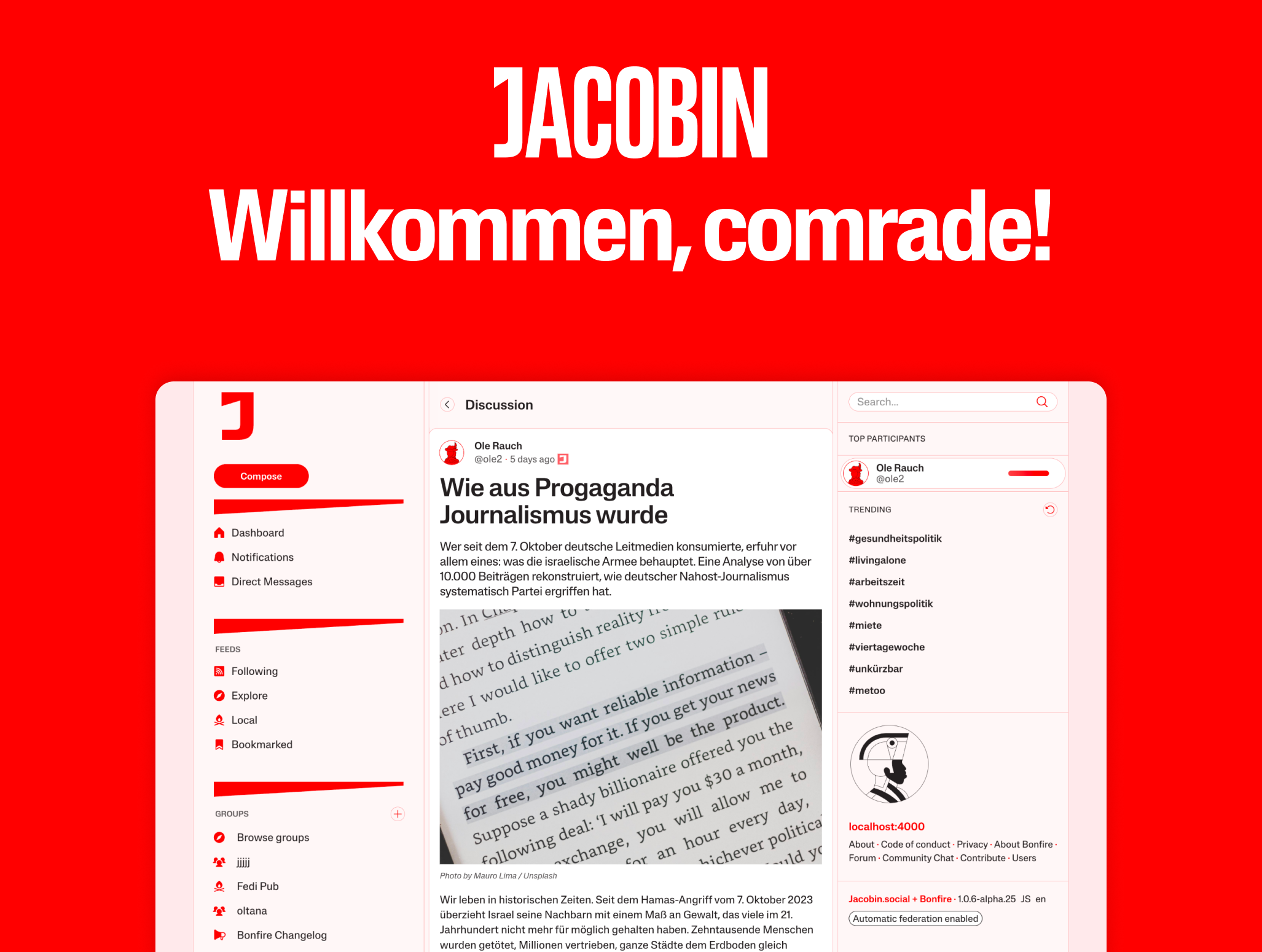
Publishing
A deep Ghost ↔ Bonfire integration
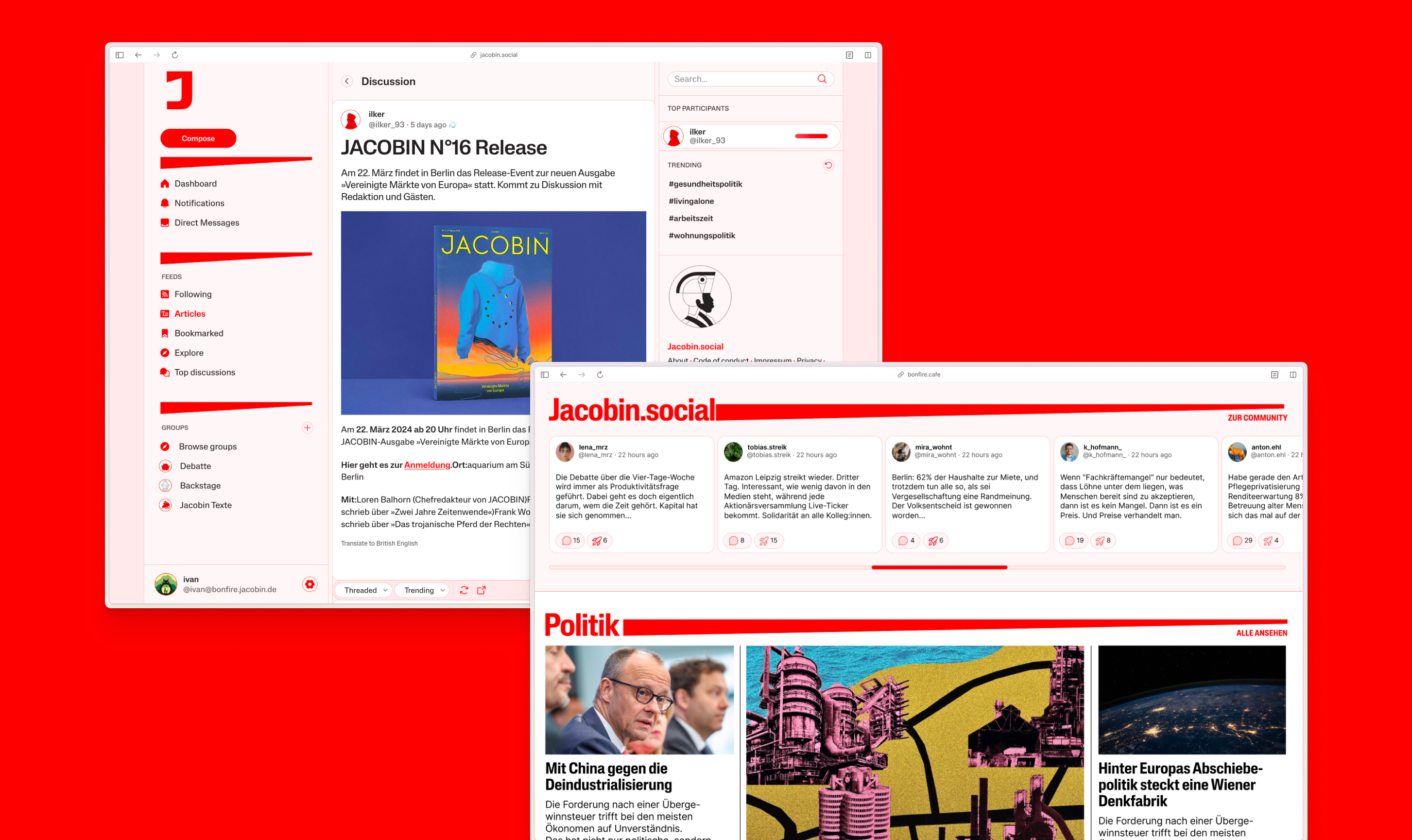
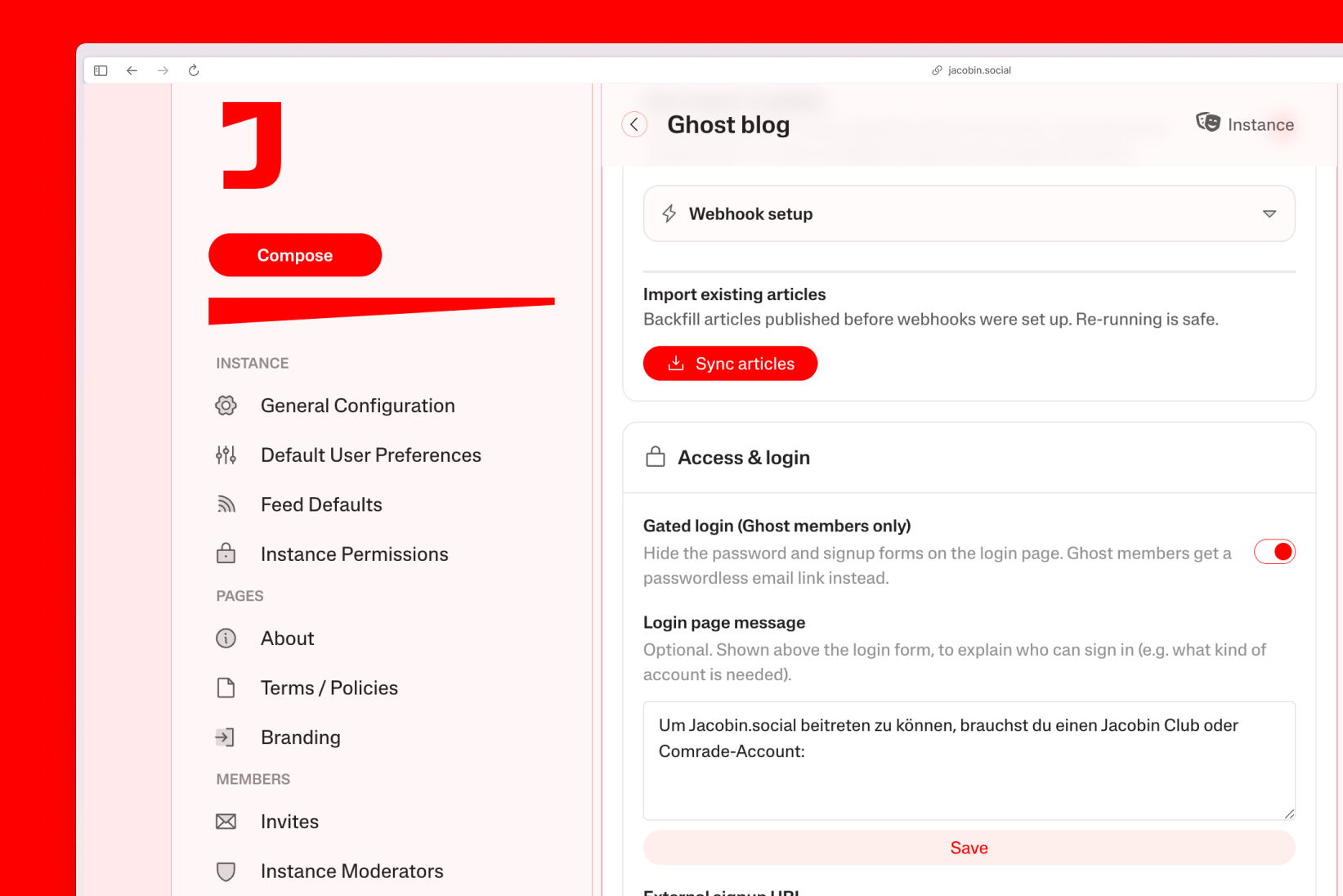
Jacobin kept the Ghost workflow its editorial team already knew. We developed an open-source Bonfire extension around it, connecting publishing, membership, access and conversation without asking the team to maintain the same information twice.
Articles stay in sync
Jacobin's archive can be imported in the background, while new articles and later edits arrive automatically. Titles, images, excerpts, dates and canonical links come across; unpublishing and republishing are reflected too.
Membership becomes the sign-in
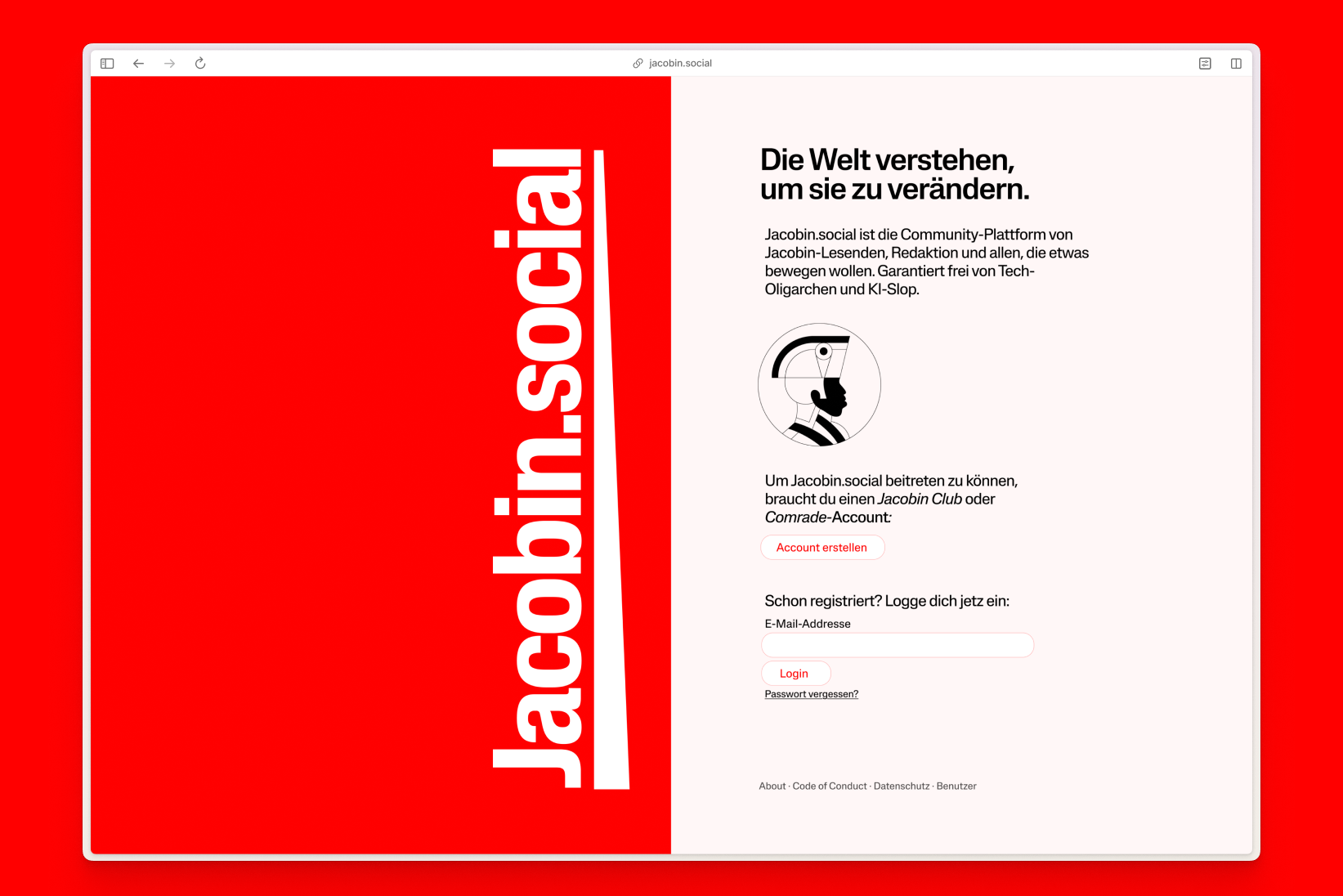
Readers use the email address they already have with Jacobin. Ghost confirms their membership and Bonfire sends a one-time sign-in link, so there is no second password or parallel member list to manage.
Tiers carry their access with them
Ghost's public, member and paid visibility settings map to Bonfire boundaries. Membership tiers become circles that can unlock articles, discussions and private community spaces.
Every article opens into the community
Imported articles land in the group or topic Jacobin chooses. The embeddable comments widget connects the original Ghost page to that durable, federated discussion in Bonfire.
Doesn't Ghost already federate?
Ghost has the ability to broadcast articles into the fediverse and pull replies back. That's a great start. But Jacobin wanted to go further: a structured community space with groups, topics, polls, and specialised moderation and governance tools. Each tool does what it does best: Ghost publishes, Bonfire hosts the community.
Engagement
Where the conversation lives
Ghost gives every article a comment thread. Jacobin wanted those threads to belong to something larger.
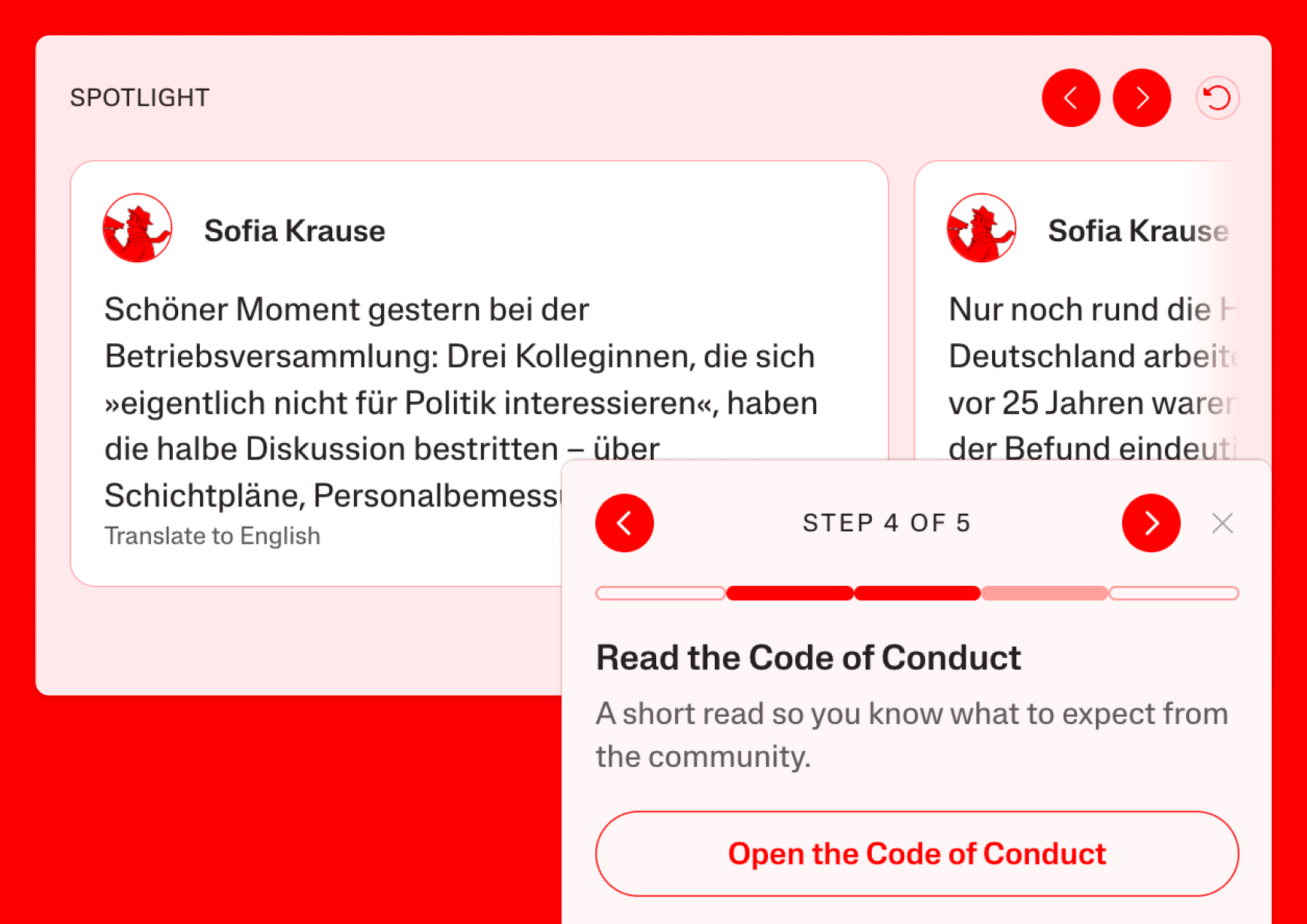
We built an embeddable widget that ties a discussion to each article, but the discussion doesn't live in a box under the page. It lives in the community, inside groups and topics, alongside everything else being discussed there.
That changes what a comment is. A thread stays discoverable long after the article scrolls off the homepage, and a conversation that outgrows its article can keep going in the group where it belongs. It's conversation with a place to go, not a comment section that fills up and empties out.
Community
Intentional spaces, not a noisy feed
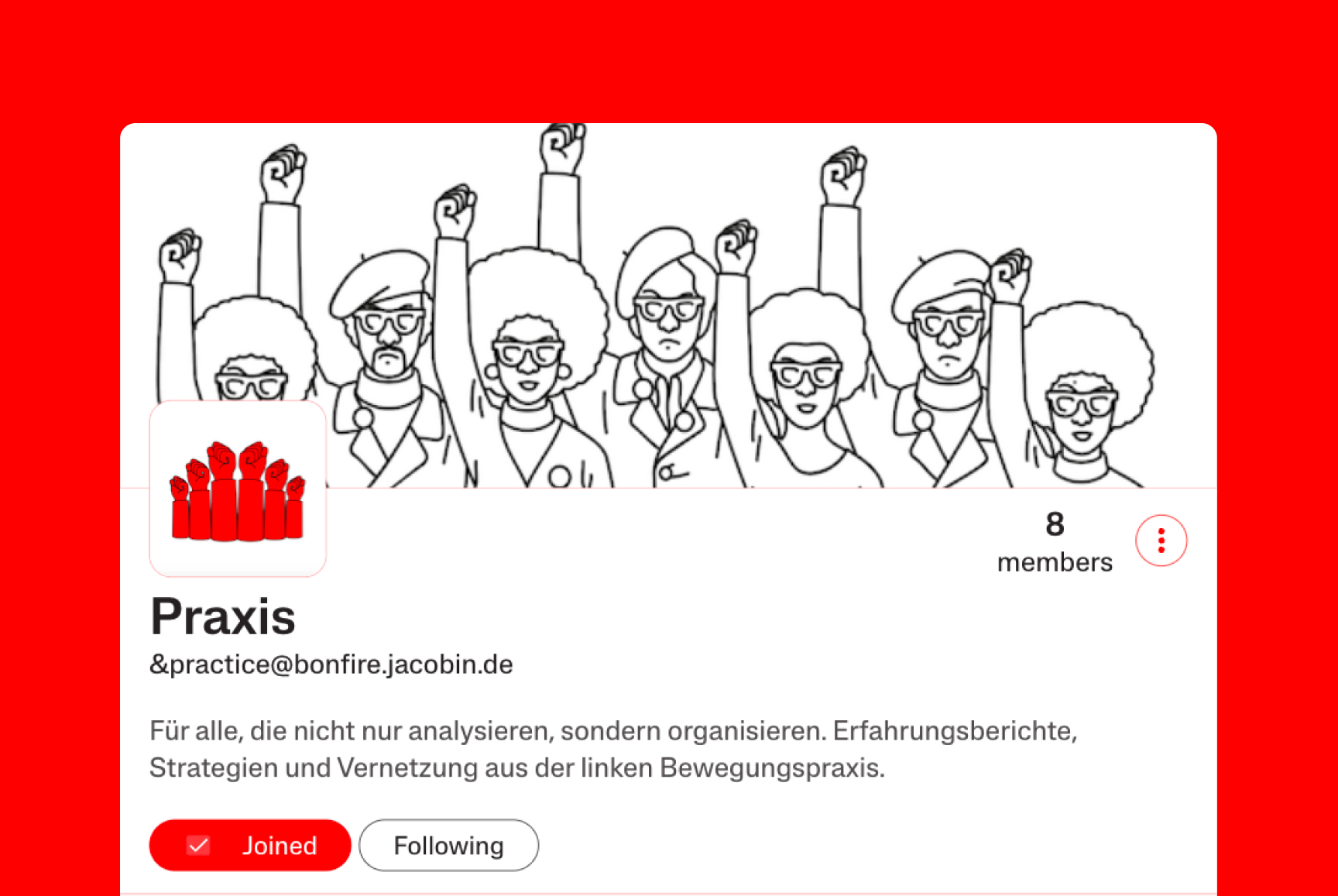
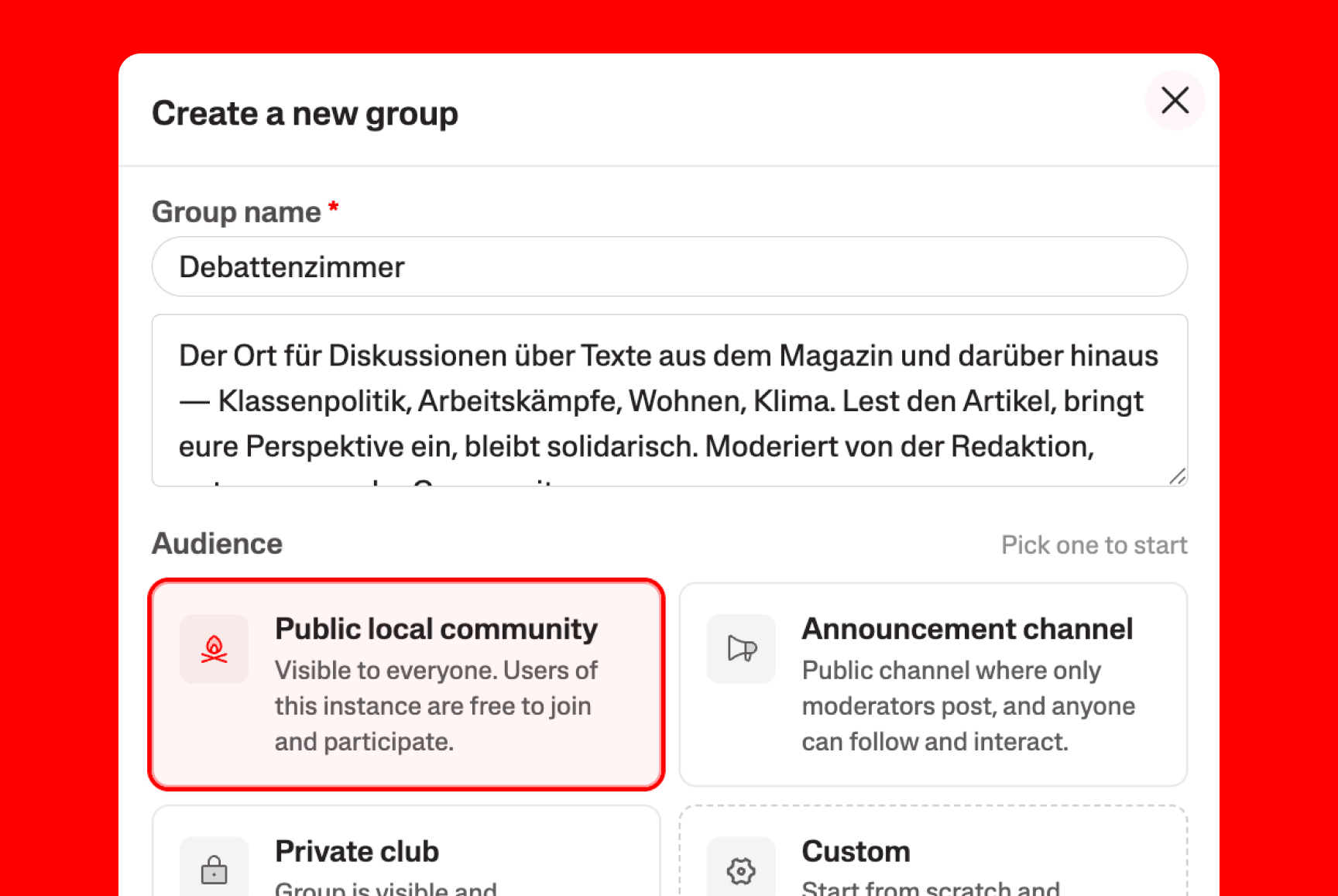
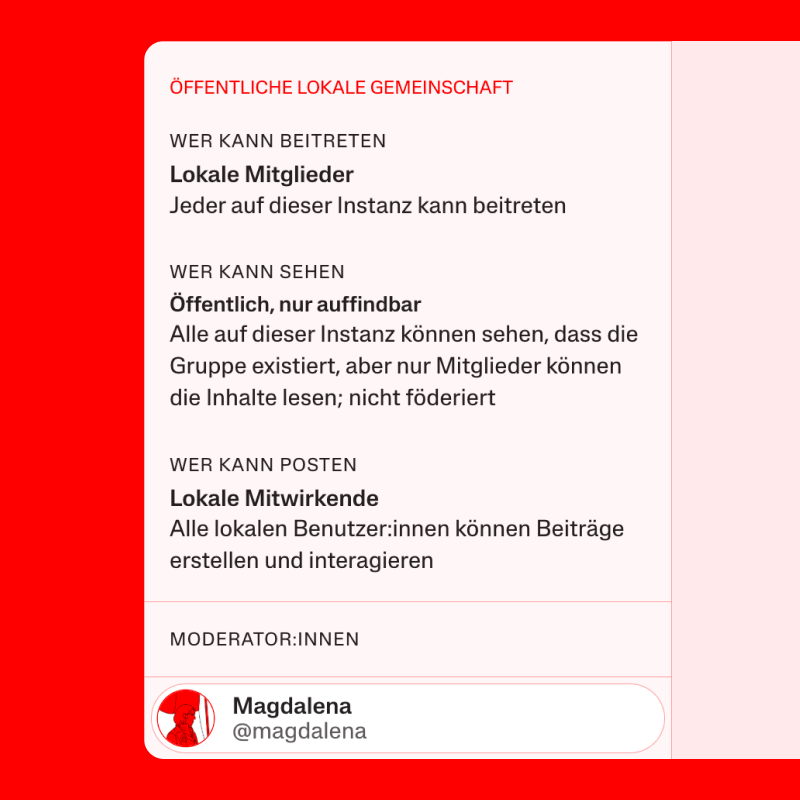
Jacobin didn't want its community lost in a noisy feed or for an algorithm to decide what surfaces. They wanted intentional spaces organised around groups and topics, organised and governed by the community itself.
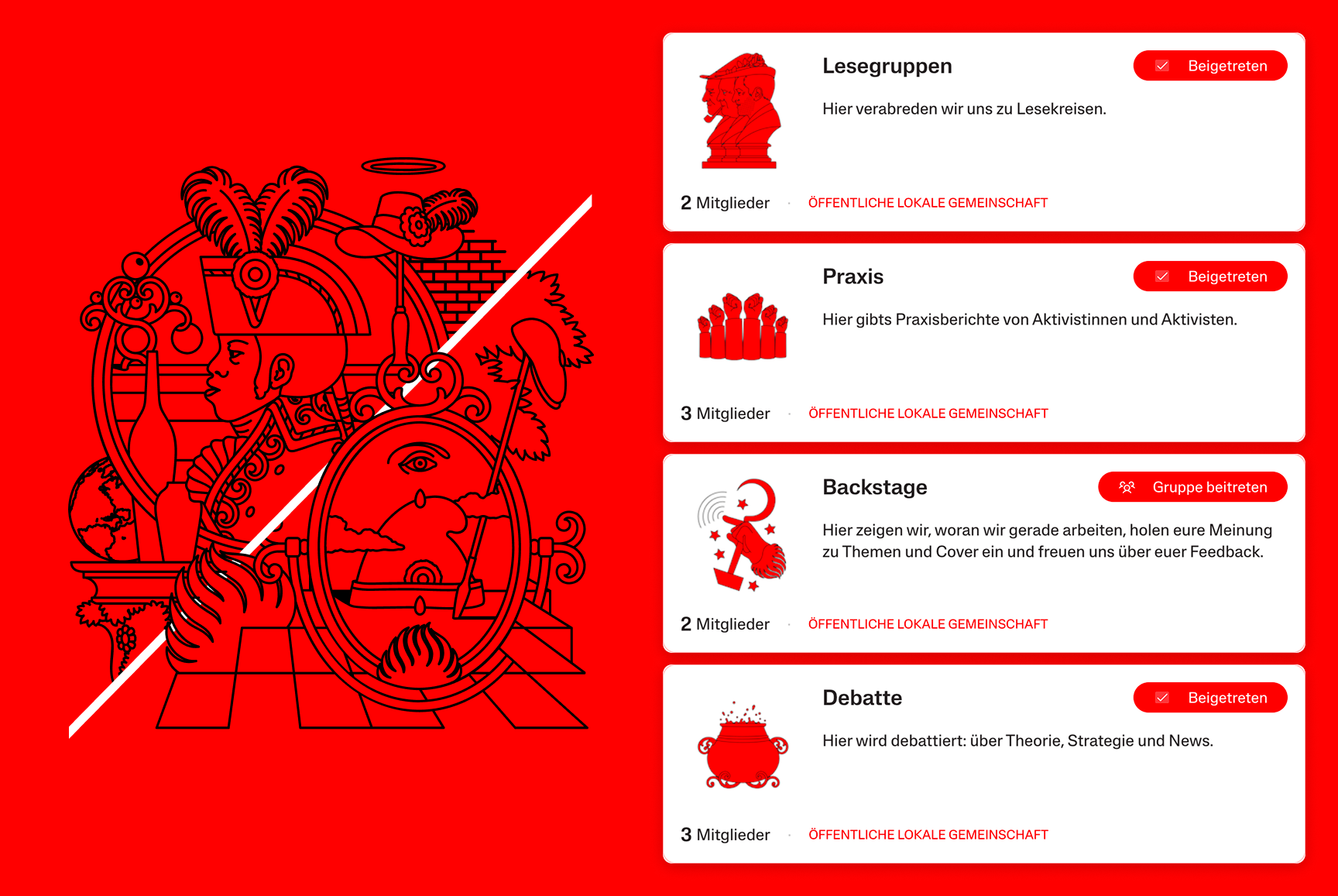
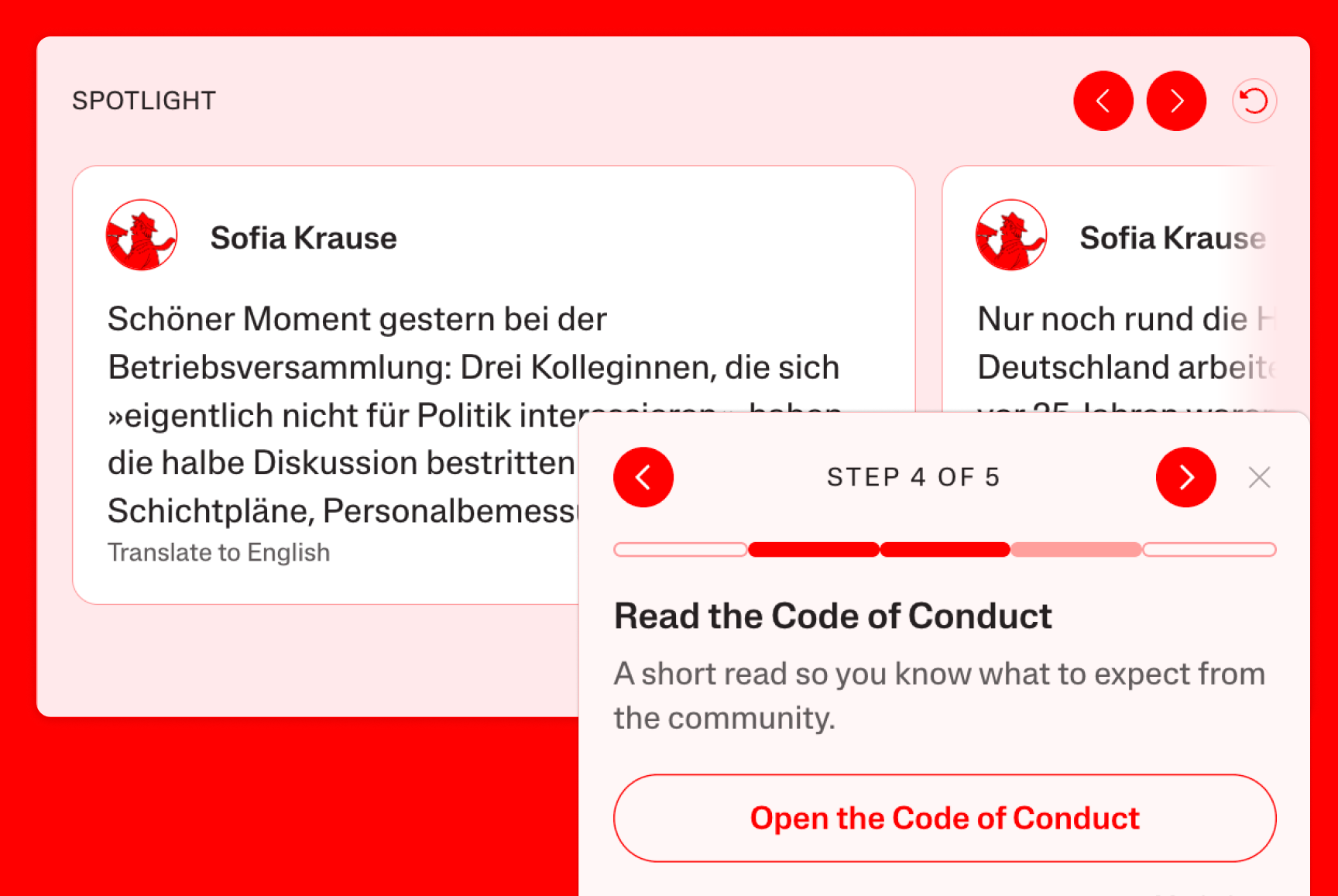
Co-design
A space that looks and feels like Jacobin, not like a generic platform
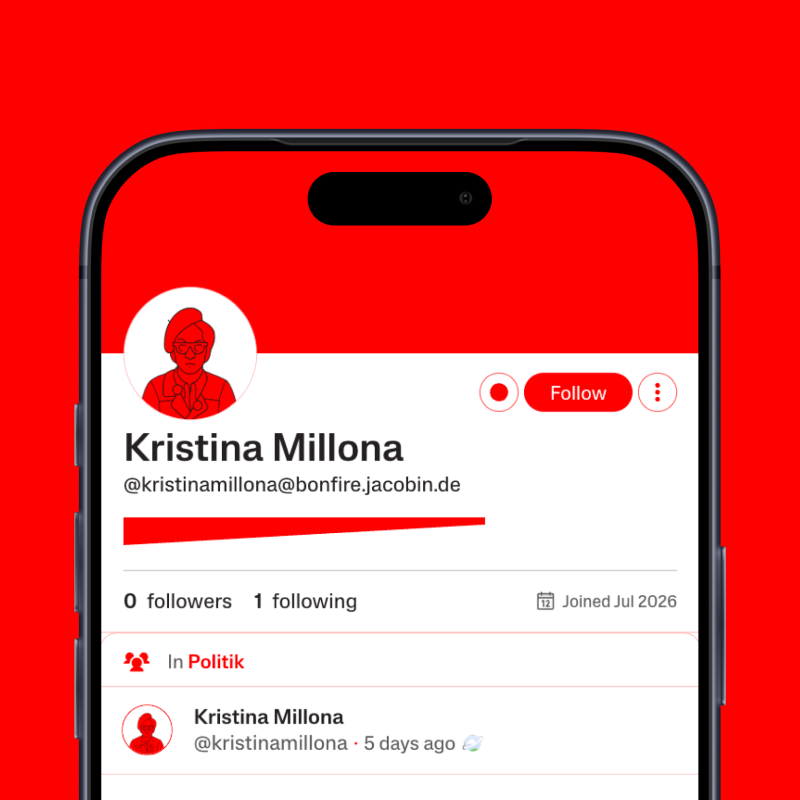
The features matter, but so does ownership of the experience. Through co-design with Bonfire Mosaic, we tailored the entire space to Jacobin's identity, so members feel they're home, not on a Big Tech platform or off-the-shelf SaaS app.
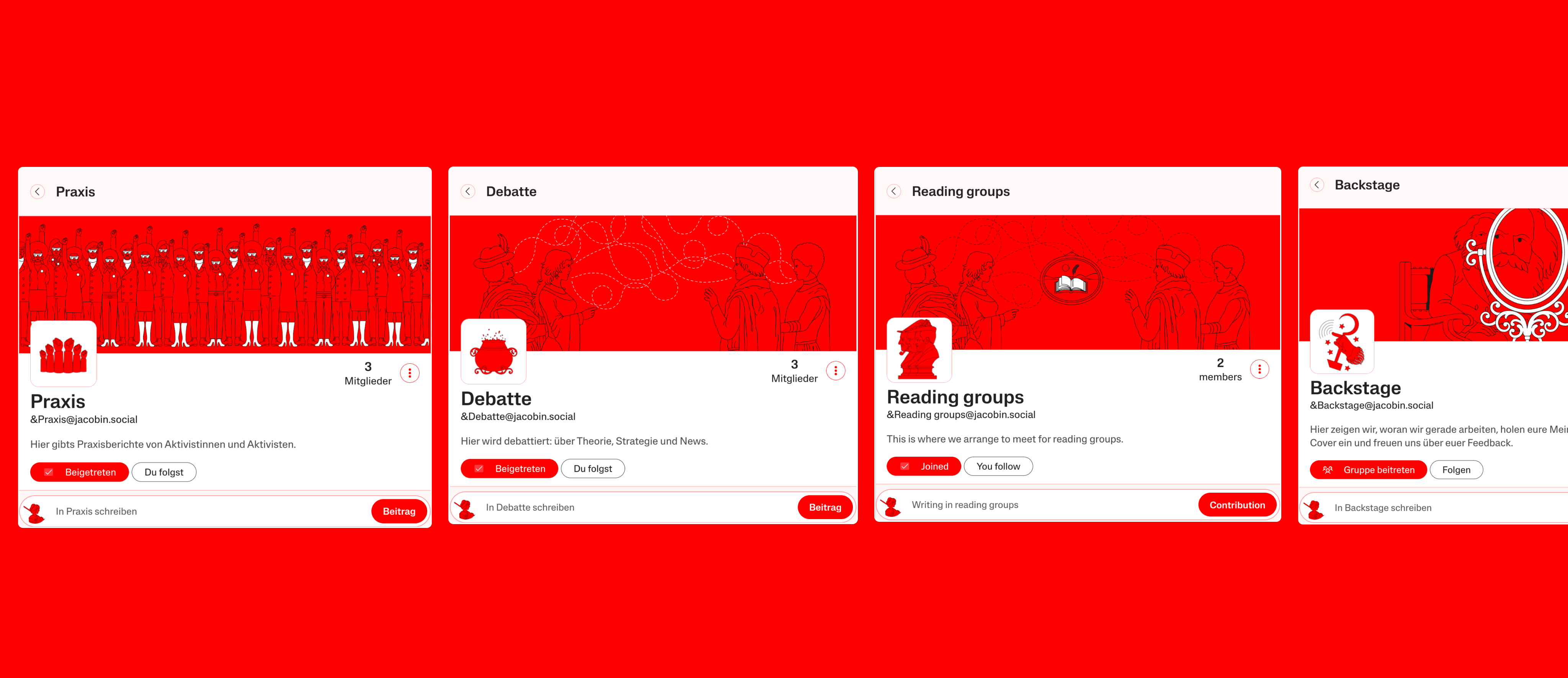
Co-designed, not configured
We didn't just hand over a settings panel or ask for a CSS file. We ran research and workshops with the Jacobin team to shape the space around how their community actually works and feels.
Their identity, through and through
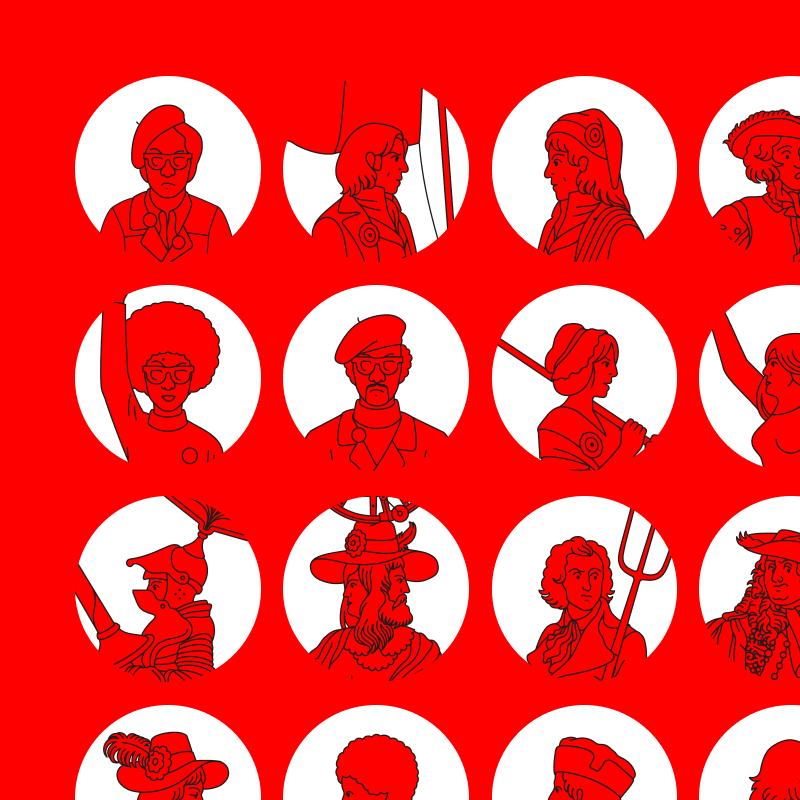
Colours, typography, iconography, layout, and tone: the experience wears Jacobin's brand throughout, delivered as a distinct Bonfire flavour rather than just a theme skin.
In their language
A complete German translation, done in collaboration with their team and contributed to the commons for every German-speaking community that follows.

Why this matters for publishers
Connected with your readers, on your own terms
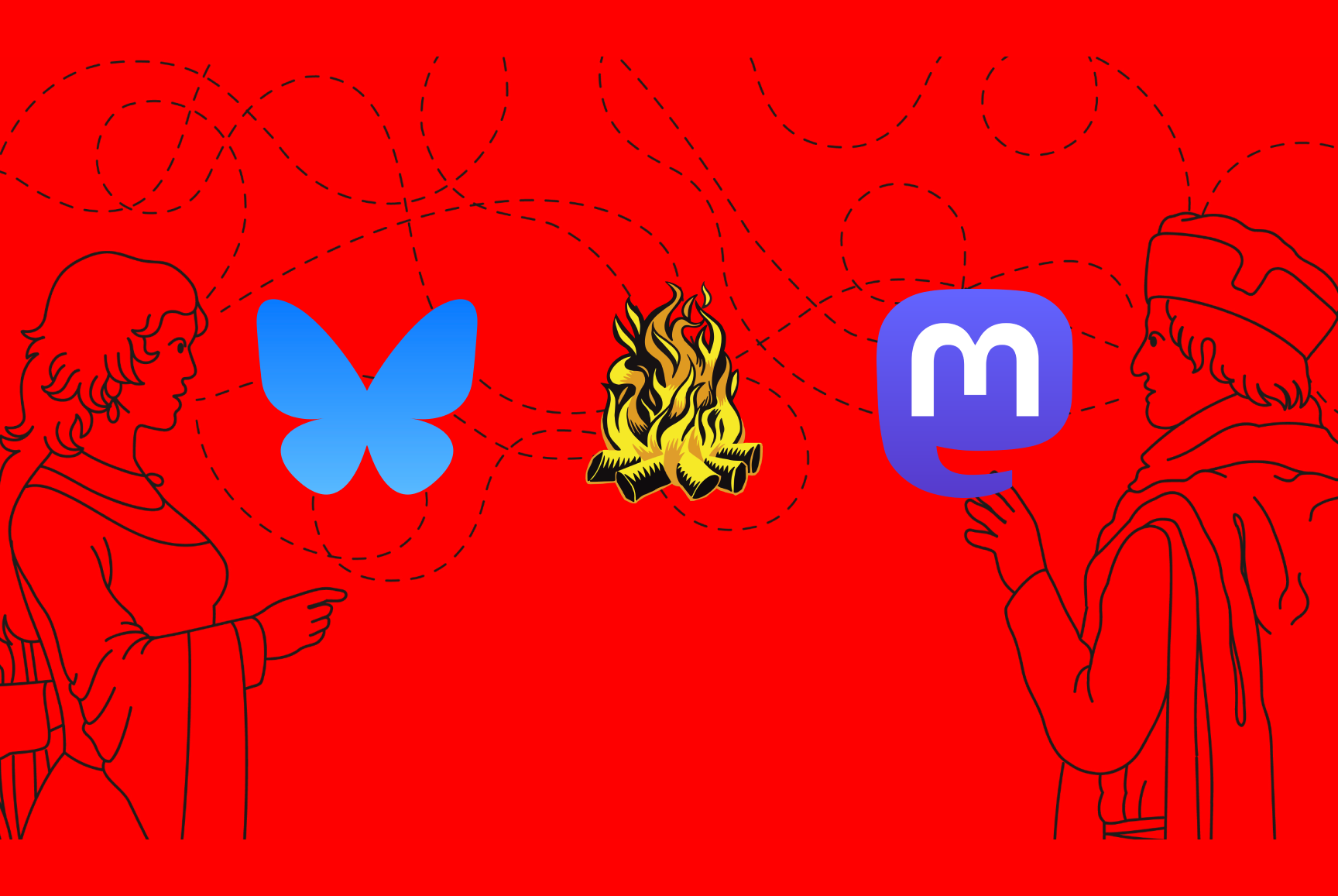
All of this forms a reusable foundation for other publishers and membership organisations that want a federated social space. The way we integrated Ghost can also be extended to WordPress, Drupal, or any other CMS.
Publishers are starting to explore deeper social integration into their articles. The reason is familiar to anyone whose reach depends on a platform they don't control: rented audiences can be throttled, de-ranked, or lost overnight.
Bonfire offers a different premise. AGPL-licensed, no VC, no ads, no incentive to enshittify the space over time. Every instance federates over ActivityPub, so the community can connect with the open social web on its own terms. And because it runs on infrastructure the publisher controls, the relationship with readers isn't mediated by a third party that can revoke it.
The launch
jacobin.social is live, and their readers now have a community space of their own, not one they rent.
What began as a reader-funded demand for something better than a comments section is now a working foundation other publishers can adopt, adapt, and fork. As the community grows, we'll share what we learn and keep this page updated.
Read what they said ↗Our role
Co-design
- Community research
- Requirements & workshops
- Governance design
Product & design
- UX & UI
- Boundary system
- Onboarding flows
Engineering
- Ghost integration
- Comments widget
- Membership sync
Hosted by
jacobin.social runs on servers looked after by CoQuest, a hosting cooperative. They maintain the Co-op Cloud recipe that makes Bonfire straightforward for any co-op to deploy, and load-tested the app with us ahead of launch. A publication owned by its readers, on infrastructure owned and operated by workers, not shareholders.
Running Ghost, WordPress, or Drupal?
Thinking about where your community conversation should live? Everything we built for Jacobin is in the commons and available to build on.